
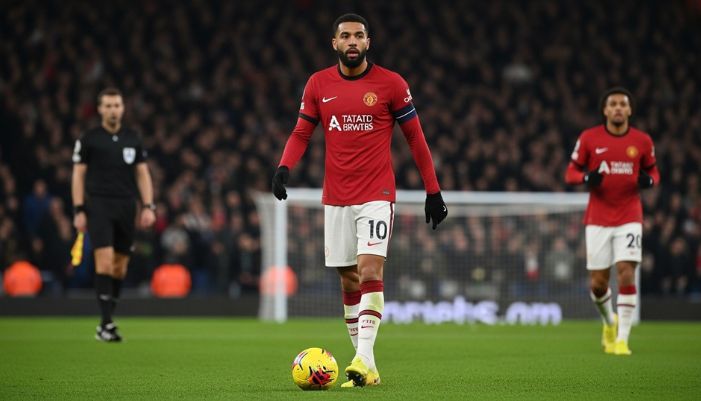
Whenever a key player goes down, the first question fans ask is “How long will they be out?”—but in elite football, recovery time is less a fixed number and more a moving target shaped by tissue type, injury history, and the demands of the player’s role. Large epidemiological studies in European professional football show that most injuries keep players out for less than four weeks, yet a smaller group of severe problems like ACL ruptures or major muscle tears can stretch absence into many months. Understanding these patterns helps you interpret comebacks on match days with more nuance than the headline estimate, because you start looking at how fully a player has regained intensity and timing, not just the date they reappear on the team sheet.
Why Average Recovery Times Are Only A Starting Point
Injury databases from UEFA and major leagues consistently show that the majority of time-loss injuries fall into the “up to 4 weeks” category, even though fans tend to remember the spectacular long layoffs. The same research indicates that structural muscle injuries—hamstring, quadriceps, calf—cluster around a median absence of about 13–16 days, suggesting that muscle tissue has a fairly consistent biological healing window before players can safely return. Yet these averages conceal wide ranges driven by grade, location and re-injury status, which is why one hamstring strain can cost a fortnight while another from the same player rules him out for two months.
How Injury Type Shapes Time On The Sidelines
Different tissues recover on different timelines, so the label attached to an injury already tells you a lot about how long a player might be missing. For example, large cohort data from elite men’s football show median layoff times of around two weeks for many structural muscle injuries, several weeks for moderate ligament sprains, and many months for serious ligament ruptures such as ACL tears. As a viewer, knowing which “bucket” an injury falls into allows you to map a rough return window and then pay closer attention to how the player’s role and intensity are managed when they re-enter the match-day squad.
Typical Recovery Ranges For Common Football Injuries
While every case is individual, broader research gives realistic bands that help frame expectations when a commentator mentions a diagnosis. The figures below reflect median or typical ranges reported in professional cohorts, not guarantees for any single player, but they show how sharply timelines diverge across muscle, ligament and complex joint injuries.
| Injury type | Typical layoff in elite football | What viewers should expect on return |
| Minor muscle strain (grade I) | ~1–2 weeks (around 10–14 days) | Quick return, some minutes management early on |
| Structural muscle tear (grade II+) | ~2–4 weeks on average (median ~13–16 days) | Rotation, cautious build-up of high-intensity actions |
| Lateral ankle sprain | Most <4 weeks; median set around 1–3 weeks | Early instability in duels, heavy taping/support |
| High ankle sprain | Often 4–6+ weeks (median around 4–5 weeks) | Longer regain of sharp turns and acceleration |
| ACL rupture (post-surgery) | ~7–10 months to full team training/matches | Long phased return, delayed full confidence and duels |
For live viewing, these ranges explain why a “back from a small strain” player might look almost normal after one or two matches, while a returning ACL case can be physically available yet still cautiously avoiding certain movements or full-risk challenges months after first reappearing. Instead of judging sharpness as a binary, you can read their minutes and movement choices as part of an extended return-to-performance curve that starts long after medical clearance.
Why Two Players With The Same Diagnosis Recover At Different Speeds
Even when the scan report uses the same label, recovery time can differ widely between players because of location, severity and underlying tissue characteristics. Research on muscle injuries in professional squads shows that intratendinous lesions—tears involving the tendon structures within the muscle—have substantially longer layoff times than more superficial myofascial strains, often doubling typical absence durations. Age, past injury history, and baseline strength also matter, with re-injuries consistently showing longer absences than first-time injuries across multiple diagnoses, including hamstring and groin problems. For fans, this means that hearing “another hamstring for this player” should immediately raise expectations of a longer and more carefully phased comeback than a first strain.
Reading Combacks More Intelligently When You ดูบอลสด
Watching matches live gives you a richer sense of how fully a player has really returned than any simple “X weeks out” graphic, because you can track their involvement minute by minute. If you follow ดูบอลสด with awareness of typical recovery ranges, you learn to distinguish between a player who is technically fit to play and one who has regained the confidence to accelerate, twist and compete for awkward balls at full speed. That perspective also changes how you judge managers’ decisions: what can look like over-rotation or caution from the outside often reflects a structured plan to avoid re-injury by gradually exposing recovering players to the type of high-intensity actions that originally caused their problem.
How Return-To-Play Decisions Are Actually Made Inside Clubs
Medical and performance staff do not rely on scan dates alone; they combine imaging with functional tests, training response and player feedback before clearing someone for match selection. Consensus work in football medicine stresses that return-to-play decisions after lower-limb muscle injuries should weigh strength asymmetry, sprint capacity, change-of-direction tests and tolerance to repeated high-intensity efforts, rather than simply waiting a fixed number of days. This is why players sometimes participate in partial training for weeks before appearing on the bench—staff are testing whether their bodies can handle the specific mechanical loads their position requires within the team’s tactical model.
Conditional Scenarios: How Context Stretches Or Compresses Timelines
Context around the team can subtly pull recovery timelines in different directions, even when medical staff try to adhere to best-practice guidelines. In relegation battles, cup runs or tight title races, pressure to bring back key players may rise, increasing the temptation to accept slightly higher re-injury risk in exchange for short-term availability. Conversely, in deeper, well-managed squads, clubs can afford to let players overshoot the median recovery time, aiming to reduce recurrence risk and preserve long-term availability across multiple seasons rather than chasing a single match.
The Hidden Role Of Stress, Sleep And Workload In Injury And Recovery
Beyond scan results, psychological stress, sleep quality and cumulative workload all influence both injury risk and how smoothly recovery proceeds. Longitudinal work in professional football has shown that high perceived stress, poor coping, inadequate sleep and chronic fatigue all correlate with greater subsequent injury risk, suggesting that “overloaded” players break down more easily and may also recover less predictably. Surveys of players’ perceptions point to low muscle strength, lack of fitness, fatigue and excessive training as major risk factors, which implies that squads managing these variables well can expect fewer setbacks and smoother returns after unavoidable injuries occur. For viewers, tracking fixture congestion, travel and rotation patterns offers clues about which teams might be most vulnerable to longer-than-expected layoffs.
Practical Checklist For Watching Players Returning From Injury
To turn this information into something you can use during live viewing, it helps to watch returning players with a simple, structured checklist in mind rather than relying on gut feeling. Over a handful of matches, this routine gives you a clearer picture of whether a comeback is on track, rushed, or being managed conservatively within the team’s tactical context.
- Note the initial minutes load—short cameos off the bench typically signal a protective return, while immediate 90-minute starts suggest either full confidence or urgent need.
- Watch whether the player repeats the high-risk actions linked to their injury type (full sprints for hamstrings, sharp cuts for ankle sprains, heavy duels for knee issues).
- Track involvement over 15-minute blocks; reduced touches or avoidance of certain zones can indicate subconscious protection or tactical shielding by teammates.
- Compare their intensity in the first and second matches back—an increase usually signals good tolerance to the initial load, while a clear reduction may hint at lingering issues or soreness.
- Observe whether re-injury or new minor problems occur within the first month of return, a period that data consistently links to higher recurrence risk if players are brought back too early.
Using this checklist shifts your focus from simple timelines to patterns of behaviour, which aligns more closely with how medical and performance staff internally evaluate whether a player has truly returned or is still somewhere along the recovery curve. In time, that habit makes you better at anticipating which comebacks are likely to stabilise a team’s form and which might lead to further disruptions if the underlying risk factors have not really been addressed.
Summary
Large studies in professional ลิ้งค์ดูบอล โกลแดดดี้ show that most injuries keep players out for less than a month, with structural muscle problems typically costing around two weeks and more severe issues like ACL ruptures stretching recovery into 7–10 months. Layoff length is strongly shaped by tissue type, severity, re-injury status and contextual factors such as workload and stress, which is why two players with the same diagnosis can follow very different return paths. For viewers, the most useful approach is to treat medical estimates as ranges, then read comebacks through live observations of minutes, movement patterns and intensity over several matches, giving a richer picture of when a player has genuinely returned to their pre-injury influence on the team’s tactical identity.
